
Why Generic AI Content is Killing Brand Differentiation in 2026
You've seen it. I've seen it. That polished, perfectly pleasant content that could've been written by literally anyone. It's informative… tick. It's grammatically flawless… tick. It's completely forgettable. Absolutely, it is.
That's the vanilla effect, and it's everywhere in 2026. When everyone's using the same AI tools with the same vague prompts, you get the same bland output. B-O-R-I-N-G. Let's not blame AI itself, the tool isn't the problem. It's that most people are using it like a content vending machine instead of training it to actually sound like them.
We've got to give consumers more credit, because they CAN spot generic AI content, usually from a mile away. Studies show 83% of people can detect it, and here's a poke, they disengage when they do. Human-generated content gets 5.44 times more traffic than AI-generated stuff. Not because AI can't write well, but because most AI content lacks the personality that makes people want to keep reading.
Brands with distinctive personalities see 20% higher customer retention. That's not a nice-to-have. That's a business imperative. If your AI content sounds like everyone else's AI content, you're not building a brand. You're creating background noise.
The AI Homogenisation Crisis: What Changed in 2026
The shift has happened quickly. Now nearly every marketer is using AI tools, and while that's not inherently bad, it's created a massive sameness problem. When everyone's prompting ChatGPT with "write a professional blog post about X," you get 'professional' blog posts that all sound suspiciously similar.
The common advice has failed spectacularly. And, "Just tell the AI to write in a friendly tone" doesn't cut it. "Make it conversational" produces the same flavour of conversational as everyone else's. Vague adjectives don't create distinctive voices.
What's actually changed in 2026 was the realisation that AI needs specific training, not generic instructions. It's the difference between telling someone to "be funny" versus showing them 50 examples of your actual humour and saying "like this, but fresh."
The businesses with this sorted aren't using shinier AI tools. Instead, they've adopted strategies to create **custom GPTs for brand voice, **by feeding their AI real examples, creating exclusion lists, and treating voice training as infrastructure, not an afterthought.

What is AI Brand Voice Training and Why It Matters
AI brand voice training is teaching your AI tools to write like you, not like a polite robot with a thesaurus in hand. It's the difference between trying to use AI as a shortcut for the sake of it, and using AI as a trained co-creator who knows your quirks, your rhythm, and what you'd never say in a million years.
Importantly here's what training isn't: copying and pasting your whole website text into ChatGPT and hoping for the best. That's optimism, not training.
Real AI voice training means creating a comprehensive brand voice DNA document, teaching custom GPTs about your actual content patterns, building exclusion lists of words and phrases you'd never use, and establishing feedback loops to refine the output.
Why does this matter? Because 95% of purchasing decisions are driven by emotion. Generic content doesn't create emotional connections. Distinctive voices do. When your AI content sounds unmistakably like you, people recognise it, trust it, and remember it.
Creating Your Brand Voice DNA Document for AI
Your Brand Voice DNA is the foundation of everything. Without it, you're just hoping your AI randomly lands on something that sounds like kind of like you. With it, you're giving clear, actionable patterns to follow.
What to Include in Your Voice DNA
Start with examples, not descriptions. Don't write "we're casual and approachable." Show 10-15 examples of your actual writing that demonstrates casual and approachable. Your best emails, blog intros, social posts. The stuff that'd make people say "this sounds so you."
Document your patterns:
- Sentence rhythm (short and punchy? Long and flowing? Mixed?)
- Vocabulary choices (industry terms you use, colloquialisms, references)
- Punctuation habits (lots of dashes? Questions? Parenthetical asides?)
- Perspective (first person? Second person? We vs. you?)
- Humour style (sarcastic? Self-deprecating? Absurdist?)
Include your brand key phrases. The things you say that nobody else does. For Hey There Humanoid, that's phrases like "Google Drive hell" and "No judgement." Those aren't generic. They're signature.
The Exclusion List Everyone Forgets About
This is the secret weapon most people miss. Your exclusion list is every word, phrase, and pattern you'd never use. It's as important as what you would say.
Ban the corporate jargon: synergy, leverage, best practices, transformative frameworks. Blah, blah, blah. If it sounds like a LinkedIn bot wrote it, it goes on the list.
Ban the AI tells: "In today's fast-paced world," "It's important to note," "In conclusion." These are AI's verbal tics, and they scream generic.
Ban the empty superlatives: "Industry-leading," "unmatched quality," "cutting-edge." Unless you can back it up with specifics, it's fluff.
Your custom GPT for brand voice needs to know what not to do as much as what to do.
How to Train Custom GPTs on Your Unique Brand Personality
The Custom GPT Setup Process
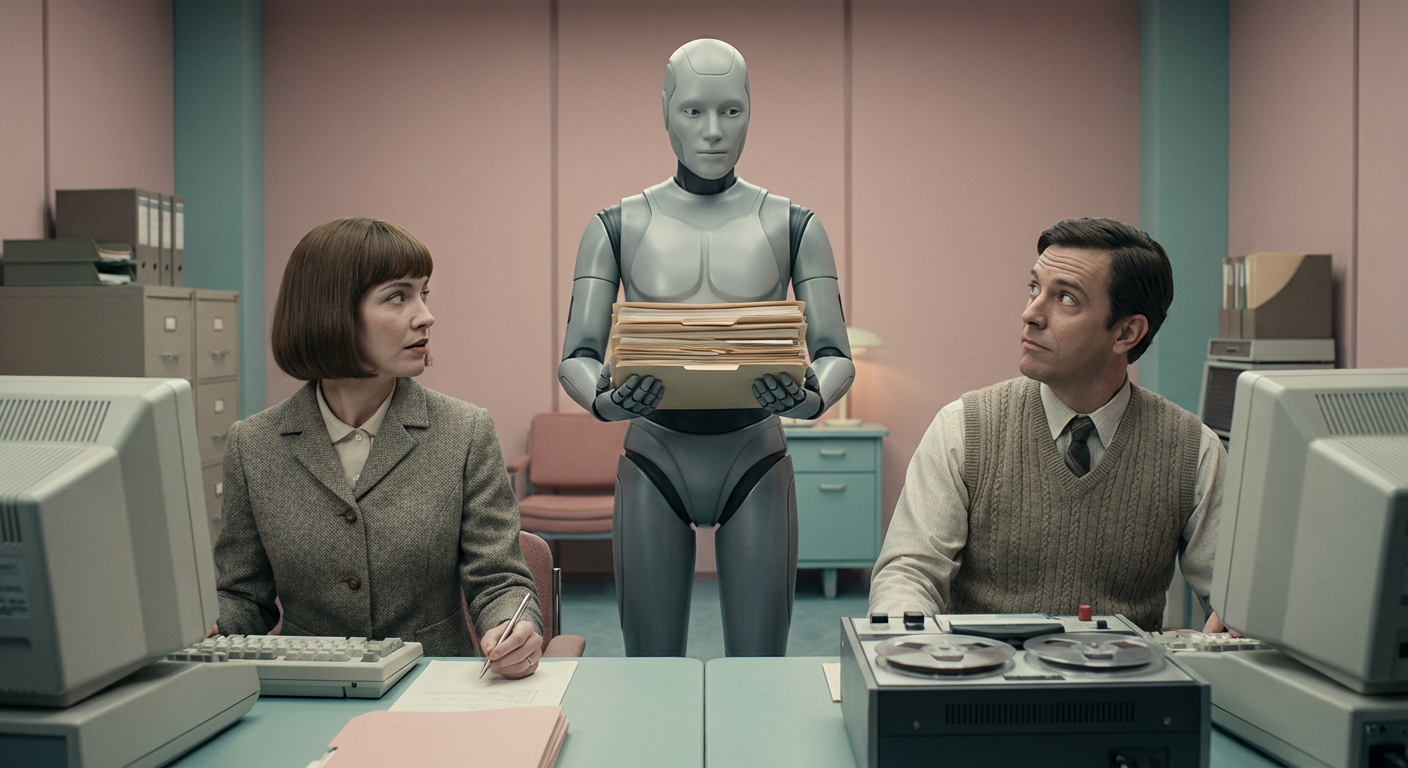
Training a custom GPT isn't complicated, but it does require intentionality. It's not a case of not just uploading files and hoping. You're creating a systematic training process.
Start by gathering your content library. You need around 20-30 pieces of your best work. Blog posts, emails, social content, anything that represents your voice at its strongest. Quality over quantity matters.
Feed your Brand Voice DNA document directly into your custom GPT. This becomes its foundational understanding. Then add your content examples as reference material. The GPT learns patterns by seeing them repeatedly.
Create specific instructions for how to apply your voice. Not "be conversational," but "use contractions, ask rhetorical questions, include parenthetical asides for relatability, avoid corporate jargon." Actionable details that can be adopted.
Include your exclusion list explicitly. Tell the GPT: never use these phrases, never start with these patterns, never end with these transitions.
Testing and Refining Your Brand Voice AI
Once your custom GPT is set up, test it ruthlessly… and then test it more. Give it the same prompts you'd normally use and compare the output to what you'd write yourself. Where does it nail your voice? Where does it drift into generic territory?
Refine based on patterns, not one-offs. If it consistently uses a phrase you'd never say, add that to the exclusion list. If it's missing a quirk you always include, add an example that demonstrates it.
This isn't a one-and-done process. Your voice evolves. Your custom GPT should too. Treat it as living infrastructure, not a static tool.
Human-AI Collaboration: The Secret to Authentic Content at Scale
It's important to acknowledge that even with a perfectly trained custom GPT, you can't fully automate yourself out of the content creation process.
And you shouldn't want to.
To keep a human in the loop is vital. Not to rewrite everything, but to add the nuance, emotion, and strategic direction AI still can't replicate.
AI handles the execution. You handle the thinking. AI writes the first draft based on your voice training. You add the specific client story, the timely reference, the strategic angle that matters this week.
This collaboration is what prevents AI homogenisation. When you're actively shaping the content, not just approving it, you inject the personality that makes it yours.
A workflow that works: you provide the strategic direction and key points, your custom GPT produces a draft in your voice, you edit for authenticity and add specific details AI couldn't know, then you publish with confidence.
It's faster than writing from scratch. It's more authentic than pure AI. It's the sweet spot.

Your AI Brand Voice Training Roadmap: Where to Start Today
You don't need to build everything at once. Start with the foundation and build from there.
Week 1: Create your Brand Voice DNA document. Gather examples, document patterns, build your exclusion list. This is the heavy lifting, but it's also the most important work you'll do.
Week 2: Set up your custom GPT with your voice DNA and content examples. Start testing with low-stakes content: social posts, email drafts, blog outlines.
Week 3: Refine based on testing. What's working? What's drifting? Adjust your instructions and exclusions accordingly.
Week 4: Implement your human-AI collaboration workflow. Establish how you'll use AI as infrastructure, not the full show. Define what you handle versus what AI handles.
The common mistake is trying to perfect everything before publishing anything. That's just procrastination, with a strategic label. Start messy. Refine as you go. Your brand voice will get stronger with iteration, not before it.
If you want the done-for-you version, our You Bots are custom GPTs trained specifically on your brand voice, with all the DNA work and refinement handled for you. No more guessing whether your AI content sounds like you.
But whether you build it yourself or get help, the critical bit is this: start now.
Generic AI content is everywhere in 2026. Distinctive, personality-driven content stands out precisely because it's rarer. Be one of the rare one.
Frequently Asked Questions
What is AI brand voice training?
AI brand voice training is the process of teaching AI tools like ChatGPT to write in your specific brand voice by feeding them examples of your content, documenting your linguistic patterns, and creating exclusion lists of phrases you’d never use. It transforms AI from a generic content generator into a tool that sounds recognisably like you.
How do I train a custom GPT on my brand voice?
Start by creating a Brand Voice DNA document with 20-30 examples of your best content, documented patterns (sentence rhythm, vocabulary, humour style), and an exclusion list of banned phrases. Feed this into a custom GPT along with specific instructions on how to apply your voice. Then test, refine, and iterate based on how closely the output matches your actual voice.
How can I make AI content sound less generic?
Stop using vague prompts like ‘write in a friendly tone.’ Instead, train AI on specific examples of your actual content, create detailed exclusion lists of generic phrases to avoid, and maintain human oversight to add nuance and personality. The key is treating AI as infrastructure that needs proper training, not a magic solution.
Why does AI-generated content sound the same?
Because most people use the same generic prompts and don’t train AI on their specific voice. When everyone tells ChatGPT to ‘write professionally about X,’ you get professional content that all sounds similar. The solution is custom GPT training with your unique brand voice DNA, not better generic prompts.
Can AI completely replace human content creators?
No, and it shouldn’t. Even with perfect voice training, AI lacks the emotional depth, strategic thinking, and contextual understanding humans provide. The most effective approach in 2026 is human-AI collaboration where AI handles execution and humans handle strategy, nuance, and authenticity.
How long does it take to train AI on my brand voice?
The initial setup (creating your Brand Voice DNA document and training a custom GPT) typically takes 2-3 weeks if you’re doing it yourself. However, refining and maintaining your AI voice training is ongoing. Your voice evolves, and your AI training should evolve with it.